Bowing Basement Wall Repair in Waukegan, IL
Bowing basement walls in Waukegan are most often caused by hydrostatic pressure from saturated soil and the region’s seasonal freeze-thaw cycles. Wall movement is measured during inspection, and a specialist can determine in a single visit whether reinforcement or anchoring is the appropriate next step.
We help homeowners in Waukegan, Illinois schedule professional inspections with local foundation repair specialists to determine the cause of wall movement and what repair options are typically recommended.
Clear answers. Practical solutions. No-obligation inspections.
What Bowing Basement Walls Can Mean
Basement walls are designed to support both the structure above and the soil around the home. When pressure from expanding soil or groundwater builds up, walls can begin to crack, bow inward, or shift over time.
- Horizontal cracks along mortar joints
- Walls leaning inward toward the basement
- Step cracking in block foundations
- Shearing or sliding along the wall surface
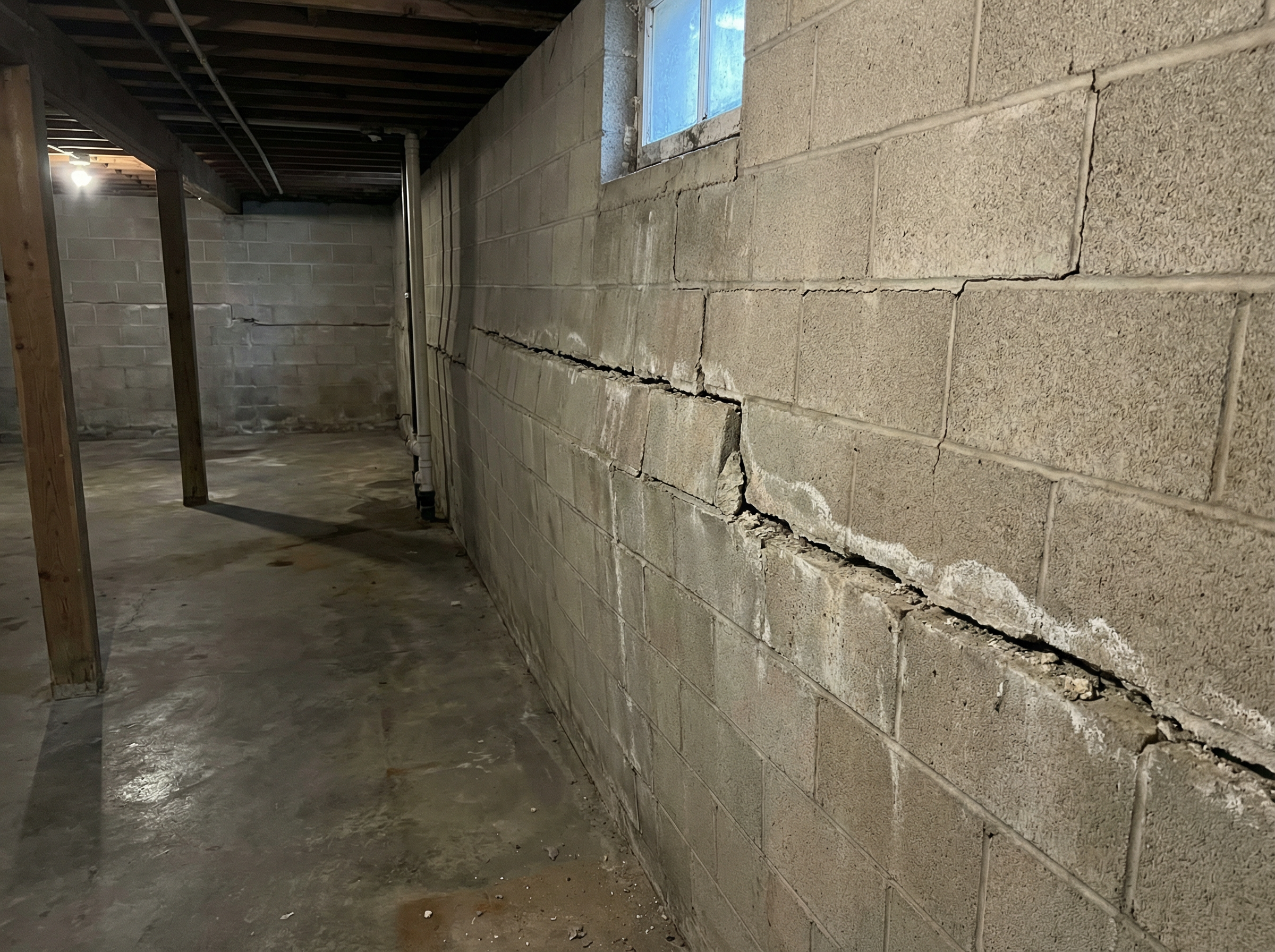
An inspection helps determine whether the wall movement is minor or progressing and what reinforcement approaches may be appropriate.
Signs Your Basement Walls Should Be Inspected
- Noticeable inward bowing or bulging
- Horizontal cracking across the wall
- Gaps forming between walls and floor joists
- Water seepage through wall cracks
- Doors or windows on lower levels sticking
If you’re seeing any of these symptoms in your Waukegan home, scheduling an inspection can help clarify the severity and typical repair options.
What Causes Basement Walls to Bow in Waukegan?
Several environmental and structural factors can contribute to basement wall movement in Waukegan and Lake County homes:
- Expansive soil pressure from moisture fluctuations
- Hydrostatic pressure from groundwater buildup
- Poor drainage or grading around the foundation
- Freeze-thaw cycles that increase soil expansion
- Long-term structural stress from settlement or aging materials
Identifying the cause is essential to determining whether reinforcement, stabilization, or moisture management is typically recommended.
For broader structural concerns, visit our foundation repair page.
How Bowing Basement Walls Are Typically Repaired
Repair methods depend on the severity of the movement and the underlying cause. After evaluation, a specialist may discuss one or more of the following approaches:
Wall Reinforcement Systems
Reinforcement systems may be installed to improve wall stability and help limit further inward movement.
Wall Anchoring Systems
Anchoring systems can be used to help counteract soil pressure and stabilize basement walls over time.
Drainage Improvements
In cases where moisture pressure is contributing to movement, drainage and waterproofing adjustments may also be discussed.
The goal of inspection is to match the repair approach to the structural condition of the wall.
What a Bowing Wall Inspection Typically Includes
- Measuring the degree of wall movement
- Evaluating crack patterns and structural stress points
- Checking drainage and grading conditions
- Assessing moisture levels and wall integrity
- Reviewing commonly used reinforcement options
Bowing Basement Wall FAQs — Waukegan, IL
Are bowing basement walls dangerous?
Significant wall movement can indicate structural stress and should be evaluated. Early inspection can help determine whether reinforcement is typically recommended.
Can bowing walls be repaired without full replacement?
In many cases, reinforcement systems can stabilize existing walls, depending on the severity of movement.
Will the wall continue to move over time?
If underlying pressure or moisture conditions are not addressed, movement may continue. An inspection helps clarify risk and next steps.
Schedule a Bowing Wall Inspection in Waukegan
If your basement walls are cracking or bowing inward, the first step is a professional evaluation to understand the condition and discuss commonly used repair options.